
When many people hear the word blockchain, they think of freedom.
They picture a decentralized system, free of intermediaries, where everyone can participate on equal terms.
Blockchain was born with the promise to transform the system: to remove gatekeepers, empower individuals, and offer open and equitable access to digital value.
Yet, when we look at today’s ecosystem, the reality is very different, and contradictions quickly emerge.
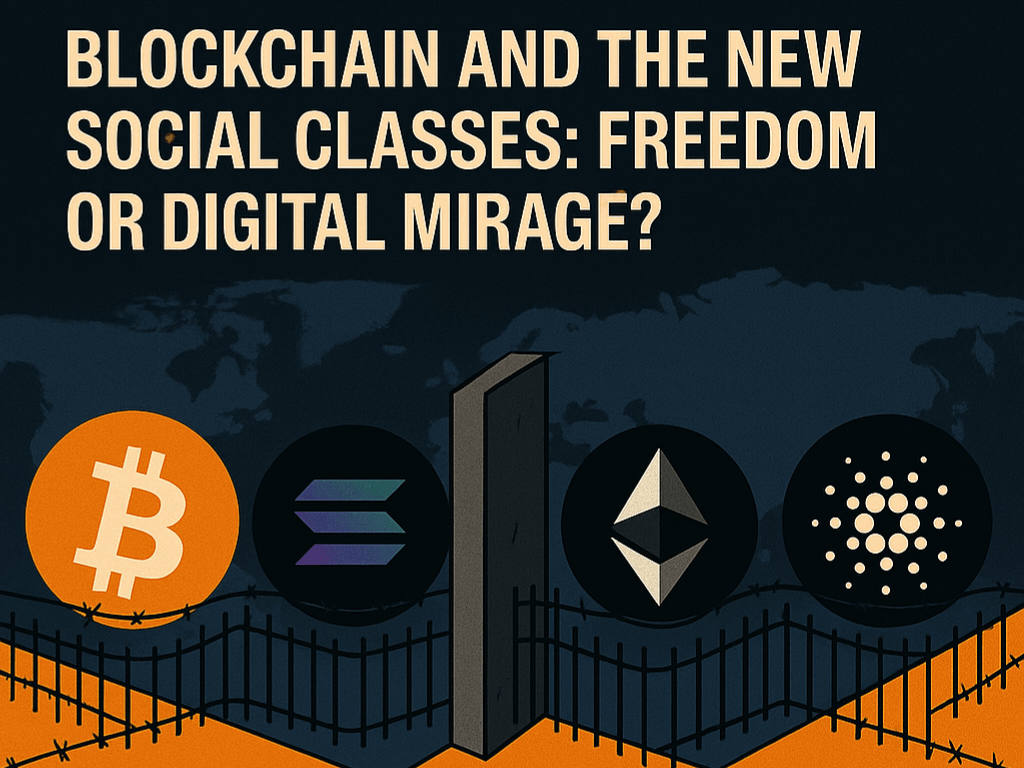
Instead of a borderless world, we find closed ecosystems, incompatible networks, prohibitive costs, and digital elites.
Ethereum has become the “exclusive neighborhood,” while other blockchains — like Solana, Algorand, or Sui — seem more like “working-class districts” where many begin simply because it’s the only option they can afford.
To this technical fragmentation, we must add a growing digital social stratification.
Each network operates as an independent infrastructure, with its own rules, languages, and levels of access:
•Restricted access to certain protocols
•Airdrops awarded only under club-like conditions
•Wallets and apps that exclude unsupported networks
•Digital pirates that only want your money
•NFTs, domains, and DAOs acting as entry barriers
Where did the promise of inclusion go?
What happened to digital equity?
A Critical but Constructive Perspective
Blockchain didn’t fail by design. We failed by replicating the same hierarchies of the traditional system in a digital format.
But the technology is still there: solid, transparent, and neutral.
The challenge lies in how we’re using it.
Building a truly decentralized future requires more than infrastructure.
It demands awareness, education, and the willingness to question practices that continue to reproduce inequality — even if now under new forms.
Decentralization is not just a technological architecture.
– It is a collective responsibility. –
Blockchain and the New Social Classes: Freedom or Digital Mirage? Real Decentralization or Structured Illusion?
 The Oxenoc Post
Leave a comment