
1. Introduction: What is a wrapped token?
Wrapped tokens are digital representations of a cryptocurrency that exist on a blockchain different from the original. For example, Wrapped Bitcoin (wBTC) allows BTC to be used on the Ethereum network. This “wrapping” acts as a bridge between incompatible networks, enabling interoperability, liquidity, and access to various DeFi applications.
2. Historical Analogy: The Dollar and the Gold Standard
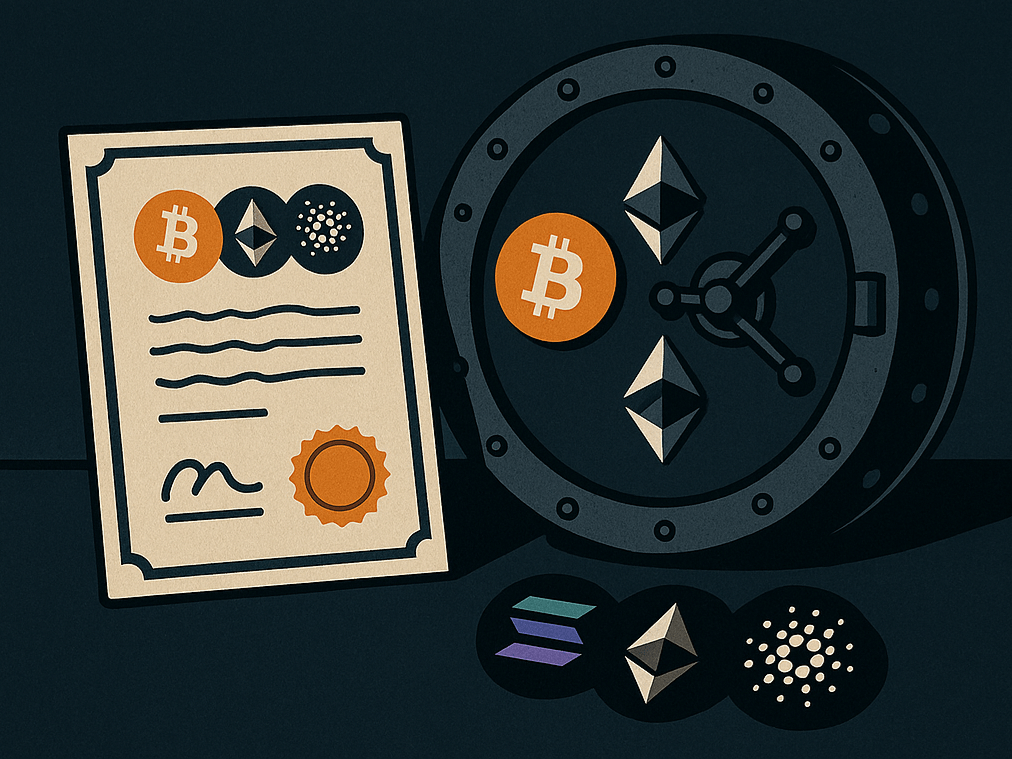
For many years, fiat currencies like the US dollar were backed by gold. A bill was essentially a “certificate” that entitled the holder to a fixed amount of gold stored in a vault. In the same way, a wrapped token represents ownership of a cryptocurrency that is locked elsewhere. It’s not the actual asset, but a digital proof of ownership that depends on trust in the system behind it.
3. How does a wrapped token work?
To create a wrapped token, the original cryptocurrency (e.g. BTC) is locked in a custodian or bridge. In return, an equivalent token (like wBTC) is issued on another blockchain. When the user wants to retrieve the original asset, the wrapped token is burned, and the native token is released. This process relies on intermediaries, smart contracts, and the security of the technical infrastructure involved.
4. Trust, Interoperability, and Risk
While blockchain promotes decentralization, wrapped tokens introduce new layers of trust. The system relies on custodians, validators, or automated contracts. If any of these fails, your funds can become inaccessible, lose value, or even disappear. Additionally, not all exchanges support wrapped tokens, which limits their usability outside the ecosystem in which they were issued.
5. Use Cases vs. Real Limitations
Wrapped tokens allow access to DeFi opportunities: staking, DAOs, lending, or liquidity provision without selling the original asset. However, they face technical risks, compatibility issues, and centralization concerns. Often, users believe they hold a cryptocurrency when in reality, they only hold a promise that represents it.
6. Bridges and Custodians: Who Do We Trust?
The entire system depends on entities that guarantee parity between the real asset and its wrapped version. This can involve smart contracts, validators, or centralized custodians. If any of them is compromised, the value guarantee breaks. Ultimately, the wrapped token’s security depends on the trust placed in these actors.
7. Conclusion: Do We Really Own What We Think We Own?
A wrapped token may serve as a digital certificate of ownership, but it’s also a mirror that only reflects value if others believe in it. You’re not holding gold; you’re holding a piece of paper that claims you have a right to gold. True decentralization means questioning these dynamics and fully understanding the risks. In the blockchain world, ownership is upheld by trust in code, custodians, and cross-chain bridges.
In summary:
Wrapped tokens = Digital certificates of value
“It’s like having a certificate that proves you own a piece of something real.”
You don’t hold the native asset (e.g. ADA or BTC).
You hold a digital representation backed by a custodian (Coinbase, a bridge dApp, or a smart contract).
A wrapped token like wBTC or CBADA means someone is storing the real asset, and you hold a digital “ticket” that represents its value.
The Risk: Trust and Compatibility
You rely on the custodian or protocol to maintain parity and security.
But that “ticket” (wrapped token) isn’t accepted everywhere.
If you send it to an exchange that doesn’t support it, it’s like trying to cash a check at a bank that doesn’t recognize the issuer.
Final Reflection:
“The value of the wrapper isn’t in the wrapper itself, but in the faith that someone else will unwrap it for you.”
Wrapped Tokens: Useful Representations or an Illusion of Ownership?
 The Oxenoc Post
Leave a comment